
Félix Pago
Félix PagoFinance
4.6868.00 Reviews
- Version
- 1.1.14
- Installs
- 100.00K
- Age Rating
- Everyone
Screenshots
Our Review of Félix Pago
 Analysis by Appyee
Sending money from the United States can be surprisingly awkward when the person receiving it is part of your everyday life. A shared household may have rent, groceries, school costs, or emergency expenses moving in different directions, while relatives may be in another country and need help without dealing with a complicated financial interface. I approached Félix Pago with that practical situation in mind: not as a budgeting tool for an entire family, but as a focused finance app built around sending money.
My first impression is that its narrow purpose is also its main appeal. The app is made by Félix Pago and is free to use as an app, with an Everyone content rating. It has attracted over one hundred thousand installs and holds an average rating of 4.6 from around one thousand six hundred ratings, which suggests that its straightforward approach is resonating with a meaningful group of users. The current release is version 1.1.14, and it supports Android 7.0 and later.
How Félix Pago fits into a shared household
I can see the app being useful when one person in a household regularly handles transfers but the money belongs to several people. Imagine a couple in the United States helping a parent abroad. One person may initiate the payment, while the other checks the amount, confirms the recipient details, and keeps a note of why the transfer was made. In that arrangement, the app can serve as the sending point, but it should not be mistaken for a shared household ledger.
That distinction matters. A money-transfer app and a family finance app solve different problems. Félix Pago is relevant when the immediate task is moving money from the United States. It is less suitable if you want shared budgets, categorized spending, bill scheduling, or a complete record of every household transaction. I would use it for a specific transfer workflow, then keep broader household accounting somewhere else.
A realistic example is a weekend grocery situation. A relative abroad may need help quickly, and the person in the United States who normally sends money is away from home. Another adult may need to take over the practical task. Before opening the app, I would agree on the recipient, amount, purpose, and who will verify the details. That small conversation is more important than it sounds, because a simple sending interface does not remove the need for household approval.
For shared devices, I would be careful. A phone used by several people is convenient for coordination, but financial apps should not be treated like a communal photo gallery or streaming account. The person who owns the relevant financial access should remain the person making the final decision. If several household members need visibility, a separate message or household note can provide that coordination without assuming that the app itself offers family roles or a shared dashboard.
The useful boundary between sender and coordinator
One of the most practical ways to use Félix Pago is to separate preparation from authorization. A family member can collect the recipient’s information and confirm the amount in a conversation, while the account holder opens the app and completes the transaction. This reduces rushed decisions and avoids handing financial access to someone simply because they happen to be holding the phone.
I also recommend treating the recipient details as something to verify every time, especially when sending to a relative whose information has not been used recently. Familiar names can create false confidence. A household may have several relatives with similar names, or a contact may have changed their preferred receiving details. The app may make the sending process feel quick, but the human checking step still belongs in the workflow.
Another useful habit is to keep the app’s role clearly defined in household conversations. “Félix Pago is where we send it” is different from “Félix Pago is where we track all our money.” That wording prevents people from expecting a complete family finance system from a transfer-focused product. I found this kind of boundary especially helpful for couples who share expenses but do not share every account or financial decision.
Starting out without blurring account boundaries
Because this is a finance app, setup deserves more care than the short store summary might suggest. I would install it on the personal device of the person who normally sends money, rather than automatically placing it on a shared tablet or a child’s phone. The free price makes trying it easy, but convenience should not decide who gets access to a financial workflow.
Before using it for a real transfer, I would make sure the account holder understands which phone, contact information, and payment details are being used. I would also avoid creating multiple household accounts just to let everyone “see what is happening.” That can create confusion about which account is authorized to send money and which person is responsible for checking the recipient.
The app supports Android 7.0 and later, so it can be considered for older Android phones that are still in regular use. That is useful in a household where one person has a newer phone and another relies on an older device. Still, compatibility is not the same as suitability. An older phone may be shared, poorly secured, or used by several people, so I would choose the device with the clearest account ownership rather than simply the device that can install the app.
My setup checklist would be simple:
- Choose one clearly responsible account holder.
- Decide who may help prepare a transfer and who gives final approval.
- Confirm the recipient using a separate conversation when the payment is important.
- Keep a household note of the purpose and amount without storing unnecessary sensitive information.
- Review the result with the sender rather than assuming every family member should have direct access.
This approach is not about making the process bureaucratic. It is about avoiding the most common shared-device mistake: treating access as harmless because the people involved know one another. Financial trust can exist inside a family while account boundaries still remain useful.
What I would check before relying on it
I would begin with a small, non-urgent transfer rather than making the app part of an emergency plan immediately. That gives the household a chance to understand the flow, confirm that the intended recipient is correct, and learn how the app presents the transaction before a larger need appears. A test run is particularly sensible when one person installs the app but another person is the one who usually manages family finances.
I would also pay attention to the final review screen and any confirmation information shown during the process. The most important questions are practical: Is the recipient unmistakable? Is the amount displayed clearly? Does the household know how to recognize that the transfer was submitted? These are not glamorous features, but they determine whether a quick app remains manageable once more than one person is involved.
There is a trade-off here. A focused app can reduce the number of steps between intention and action, but fewer steps can also mean fewer natural pauses for discussion. I see speed as valuable when the details are already agreed. If the household is still debating the amount, destination, or responsibility, speed becomes a reason to slow down rather than a reason to press ahead.
Coordinating money without expecting a family control system
Félix Pago makes the most sense when coordination happens around the app, not necessarily inside it. For example, a couple might decide that one person sends money and the other maintains a monthly note of support payments. A parent and adult child might agree that the child prepares the information while the parent authorizes the transfer. These arrangements can work well because they assign responsibility without requiring every person to have the same account access.
I would not recommend using a single logged-in phone as a substitute for shared financial visibility. If the household needs a permanent record, create that record separately and keep it limited to what is useful: date, recipient, purpose, and amount. Avoid copying sensitive credentials or full financial details into a group chat. The goal is to make coordination easier, not to spread private information across every device in the home.
One non-obvious advantage of this division is that it helps prevent duplicate sending. In a busy family, two people may both respond to the same request, each believing the other has not acted. A simple rule such as “one person sends, one person confirms” can remove that uncertainty. The app handles the transfer, while the household rule handles the coordination gap.
Another useful habit is to agree on a message format before sending. A short note such as “sending the agreed household support for this week” gives the recipient and the other household members enough context without turning a transfer into a long discussion. If the amount changes, pause and reconfirm instead of assuming that a familiar recipient means the new amount is automatically approved.
Compared with a bank’s broader mobile app, Félix Pago may feel more direct for someone whose main goal is sending money from the United States. A traditional banking app is usually better for balances, account history, transfers between personal accounts, and wider financial management. Compared with a general payment wallet, a dedicated remittance-oriented app may feel more relevant when the recipient is outside the sender’s usual domestic payment circle. The right choice depends on whether the priority is a focused send or a complete financial hub.
That comparison also clarifies who should skip it. I would look elsewhere if I needed detailed household budgeting, multiple approval levels, business payment tools, recurring bill management, or a single place to monitor every account. I would also hesitate if the household cannot agree on who is responsible for the transfer. No interface can repair unclear ownership of a financial decision.
Everyday coordination that actually helps
For recurring family support, I would create a routine outside the app. Pick a day to review the request, confirm the recipient, and decide the amount. Then open Félix Pago only when those points are settled. This reduces the temptation to make an impulsive transfer simply because the app makes the action feel immediate.
For irregular help, I would use a two-person check when the amount is significant to the household. One person reads the recipient information aloud, and the account holder compares it before confirming. It may feel excessive for a familiar relative, but it is a low-effort safeguard against selecting the wrong contact or acting on an outdated request.
For a shared phone, I would avoid leaving the app open between users. The household can coordinate with a verbal handoff or a separate message, but the final sending step should happen while the responsible adult is present. This is especially important when children use the same device for games, schoolwork, or entertainment. Familiarity with the phone does not equal permission to use a finance app.
Age, trust, and the person who should press send
The Everyone rating means the app is presented for a broad audience, but I would not interpret that as a recommendation for unsupervised financial use by children. An age label describes content suitability; it does not replace a parent’s decision about money, identity, or account access. In my household, a child could help read a message or remind an adult about a planned transfer, but the adult would retain the account and final action.
Teenagers may be able to understand the practical steps, yet the right level of involvement depends on the family’s trust, local rules, and the financial account being used. I would teach the reasoning behind the transfer rather than simply handing over the phone: who is receiving the money, why it is being sent, how much is appropriate, and what to do if something looks different. That creates useful financial habits without turning the child into an accidental account manager.
Older relatives may need a different kind of support. A family member who is comfortable receiving money but less comfortable with apps may benefit from a calm walkthrough, larger text settings on the phone, and a written explanation of the steps. I would never ask them to share a password in a family group or let another person take over permanently without discussing who remains responsible.
The app’s strongest household case is therefore not “everyone uses it.” It is “the right adult uses it while the household communicates clearly.” That may sound less exciting than full family integration, but it is more realistic and safer. Félix Pago can be part of a trusted process without becoming the place where every family member stores or handles financial access.
I would also be cautious with urgent requests that arrive through unfamiliar messages. A finance app can make it easy to respond quickly, but urgency is exactly when a second verification is most valuable. Call the recipient through a known channel, confirm the request, and then make the transfer. This is a general safety habit, but it becomes especially important when several relatives share responsibility and one person may not know what another has already discussed.
My household verdict after weighing convenience and limits
I see Félix Pago as a good fit for a household that needs a clear way to send money from the United States and is willing to keep coordination simple. Its free access, focused purpose, broad age rating, and availability on older Android versions make it approachable for many families. The positive average rating and growing install base also make it feel established enough to consider rather than an obscure experiment.
What I like most is the possibility of reducing friction at the exact moment a transfer needs to happen. A person does not have to navigate a full banking environment when the task is simply sending money. That focus can be valuable for relatives who are not interested in learning a large financial platform. It also works well when one responsible sender handles the action and the rest of the household contributes information or confirmation.
My main reservation is equally clear: a focused transfer app should not be stretched into a family-management system. It does not replace a shared budget, a household record, or a conversation about authorization. Families with complicated finances may be better served by using their bank for broader oversight and keeping this app, if they choose it, for the specific sending task it is designed around.
I would recommend trying it first with an agreed, ordinary transfer and a clear division of responsibility. Confirm the recipient before opening the app, keep the final approval with the account holder, and record the transaction in the household system you already trust. Those steps preserve the app’s speed without allowing convenience to erase accountability.
My final view is positive but deliberately practical. Félix Pago is worth considering for people who want a focused way to send money from the United States, especially when a household can coordinate outside the app. It is not the right choice for anyone searching for full family budgeting, extensive account management, or child-oriented financial controls. Used within those boundaries, it can make a recurring household task feel less complicated while leaving the important decisions where they belong: with the people responsible for the money.
Verdict
Strengths of Félix Pago
- Fast international money transfers through a simple mobile interface.
- Supports sending money to several Latin American countries.
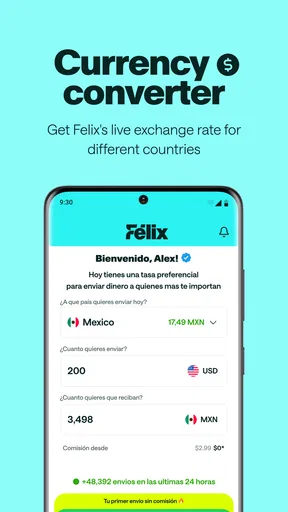
- Clear exchange-rate information before completing a transfer.
- Recipient may receive funds directly in a local bank account.
- Helpful transfer status updates reduce uncertainty after sending money.
Limitations of Félix Pago
- Availability and supported corridors vary by country and user location.
- Transfer fees can differ depending on the destination and payment method.
- Identity verification may be required before using key features.
- Delivery times can depend on banks, weekends, and local holidays.
- Customer support response times may vary during busy periods.
Similar Picks in This Category
View All
Google Wallet
Google LLC4.3

Airtel: Recharge, Bank & Loans
Airtel4.0

PayPal - Pay, Send, Save
PayPal Mobile4.2

DANA Indonesia Digital Wallet
PT Espay Debit Indonesia Koe4.5

Binance: Buy Bitcoin & Crypto
Binance Inc.4.8

Cash App
Block, Inc.4.7
Frequently Asked Questions
What is Félix Pago and how does it work?
Félix Pago is a digital money-transfer service designed to make sending and receiving funds more convenient, often through familiar messaging platforms such as WhatsApp. After creating an account and completing the required verification, users can follow guided prompts to initiate transfers, check transaction details, and receive updates. Availability, supported currencies, and features may vary depending on the user’s country.
Is Félix Pago safe to use for sending money?
Félix Pago uses account verification and security measures intended to protect users and their transactions, but no financial service is completely risk-free. Before confirming a transfer, carefully review the recipient, amount, exchange rate, and applicable fees. Never share passwords, verification codes, or sensitive banking information through suspicious messages, and contact official support if an unfamiliar transaction appears.
What countries and payment methods does Félix Pago support?
Félix Pago’s supported countries, currencies, and payment methods depend on local regulations and the specific service available in your region. In some locations, users may be able to fund transfers through a bank account or debit card and send money to eligible recipients abroad. Check the current information in the app or official listing before downloading, since availability can change.
How much does Félix Pago charge, and what exchange rate will I receive?
The cost of using Félix Pago can depend on the destination, transfer amount, payment method, and delivery option. A transaction may include a service fee, an exchange-rate margin, or both. The app should display the total amount the sender pays and the amount the recipient receives before confirmation. Always compare the final quote with other services if price is important.
How long do Félix Pago transfers take, and what should I do if there is a problem?
Transfer speed varies according to the destination country, banking network, verification requirements, weekends, holidays, and the selected delivery method. Some transactions may arrive quickly, while others can require additional processing. Keep the confirmation or transaction reference available, check the status inside the service, and contact official Félix Pago support if a transfer is delayed, rejected, duplicated, or sent to the wrong recipient.
